
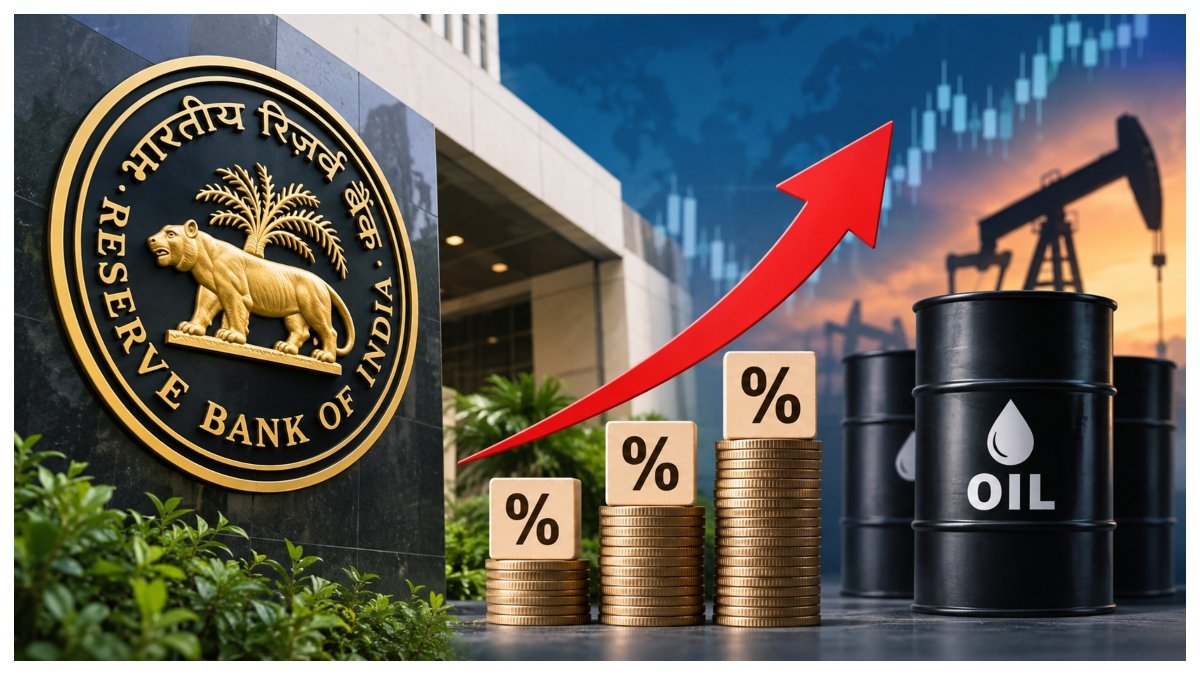
Mumbai: The Reserve Bank of India (RBI) should raise the repo rate by 25 basis points in October and follow it with another hike in December to counter external shocks, high crude oil prices and growing inflationary pressures, SBI Research has said.
The Monetary Policy Committee (MPC) is scheduled to meet from October 5-7. In August, the RBI kept the repo rate unchanged at 5.25% for the fourth consecutive meeting.
Rate Outlook Changes
SBI Ecowrap said expectations have changed sharply within a month. Earlier, markets largely anticipated a prolonged pause in interest rates, but geopolitical uncertainties and rising crude oil prices have altered the outlook.
The report said its rate-hike recommendation is independent of any action by the US Federal Reserve.
Crude oil prices have crossed $100 per barrel, while SBI Research estimated prices could climb to $123 per barrel over the next 15 days amid heightened geopolitical tensions.
Inflation Risks Rise
SBI Research expects August retail inflation to be around 4.8-4.9%. However, it said the rate-hike recommendation is not dependent on this inflation reading.
If crude oil remains elevated, CPI inflation for October and November could move towards 6.5% or higher, the report warned.
Also read: Ambani Urges India Inc To Back Working Women
It also flagged signs that inflation is becoming more broad-based, with cost pressures emerging across crude petroleum and natural gas, beverages, pharmaceuticals and electronics.
Restaurant inflation has also risen as onions, edible oil and LPG became more expensive.
Liquidity Remains Comfortable
SBI Research said FCNR(B) inflows have increased banks’ lendable resources and created surplus liquidity in the financial system.
It estimated inflows of about $127 billion, broadly matching the funding gap in the banking system.
However, strong credit demand, supported by robust Q1 FY27 GDP growth, could gradually absorb this liquidity.
The report expects banking system liquidity to normalise by the end of FY27 as credit demand strengthens during the second half of the financial year.