
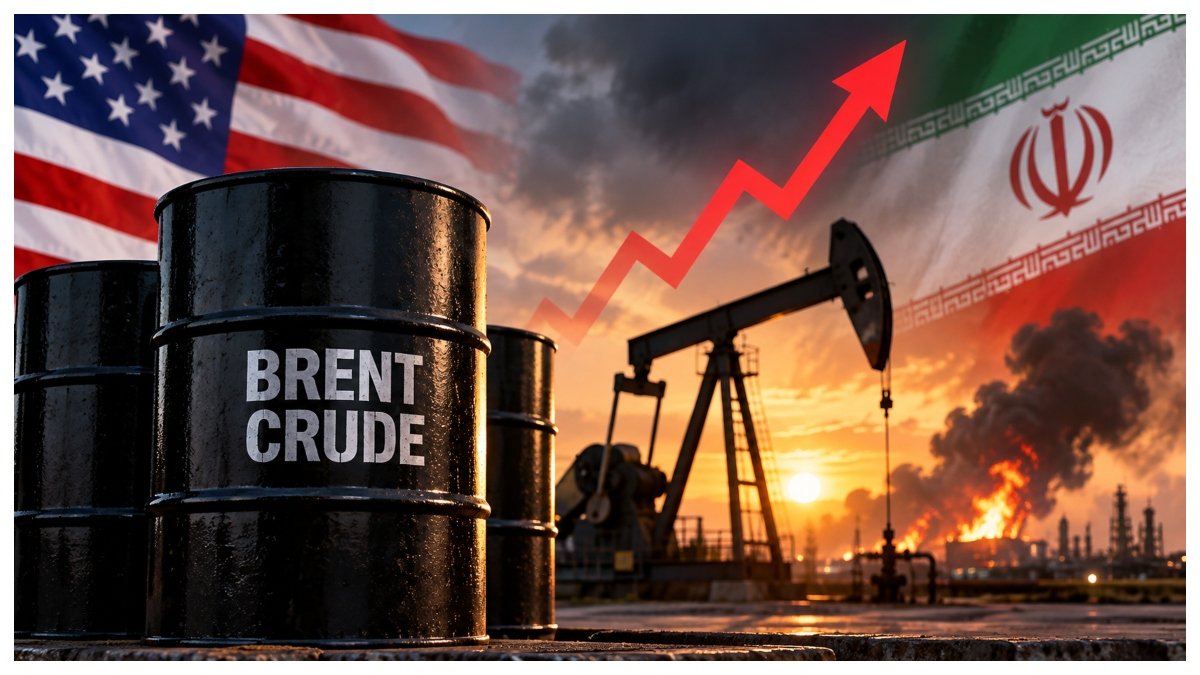
New Delhi: Brent crude surged above $105 a barrel as escalating fighting between the US and Iran intensified fears of prolonged disruptions to global oil supplies. Strong Chinese buying and sharply lower Saudi Arabian production added momentum to the rally.
The global oil benchmark climbed to its highest level since May 25, raising fresh concerns that expensive energy could push inflation higher worldwide.
Brent Extends Sharp Rally
Brent crude rose 2.63% to around $104 a barrel at 5:55 pm IST, after crossing $105 during the session.
The benchmark had moved above $100 in the previous session for the first time since July. Natural gas and diesel prices have also strengthened as markets assess the risks from the Middle East conflict.
Brent has now gained around 30% from its early-August lows after efforts to secure a permanent agreement between Washington and Tehran failed.
US-Iran Conflict Intensifies
The conflict has escalated over the past week following a period of relative calm, with few signs that either side is preparing for an immediate de-escalation.
A senior Iranian official said Tehran would not back down in response to a US naval blockade and warned that attacks could intensify if Washington continued strikes on Iranian territory.
US President Donald Trump has indicated that the conflict could continue beyond the November midterm elections. He also warned that significant relief in gasoline prices may not arrive before then.
Also read: India GDP Growth Seen At 7% Or More In FY27, Sitharaman Says Economy Remains Resilient
The conflict, now in its seventh month, has kept global energy markets on edge.
Saudi Output Adds Pressure
Supply concerns have deepened following a steep fall in Saudi Arabia’s oil production.
Saudi Arabia told Opec that its crude output fell to 6.2 million barrels per day in August, its lowest monthly level of 2026 and 23% below July, according to an Opec report.
The decline follows threats from Iran-backed Houthi rebels in Yemen against Saudi oil shipments from the kingdom’s west coast.
Their involvement has also increased concerns over Saudi Arabia’s key alternative export route that avoids the Strait of Hormuz, further tightening the global supply outlook.