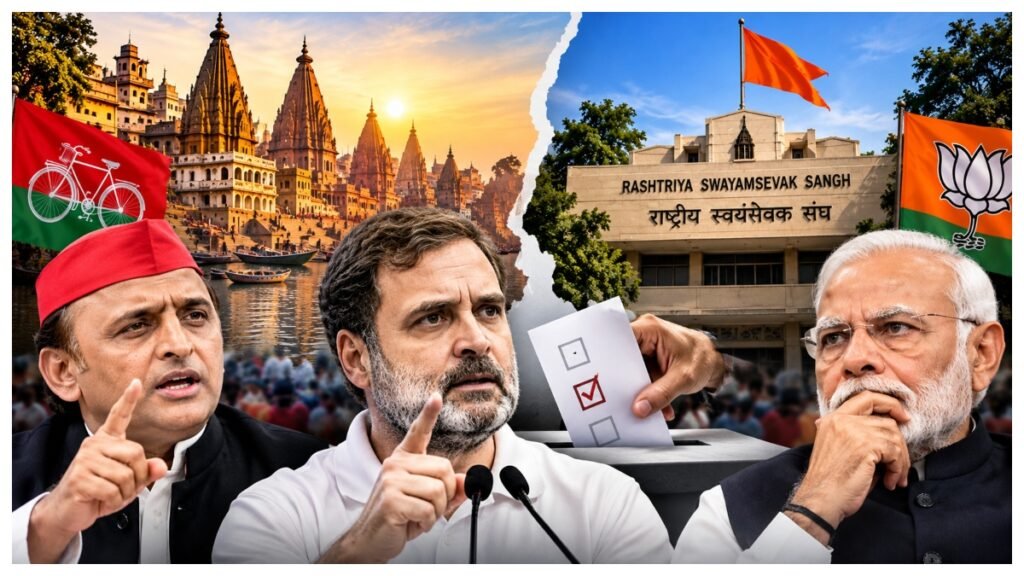

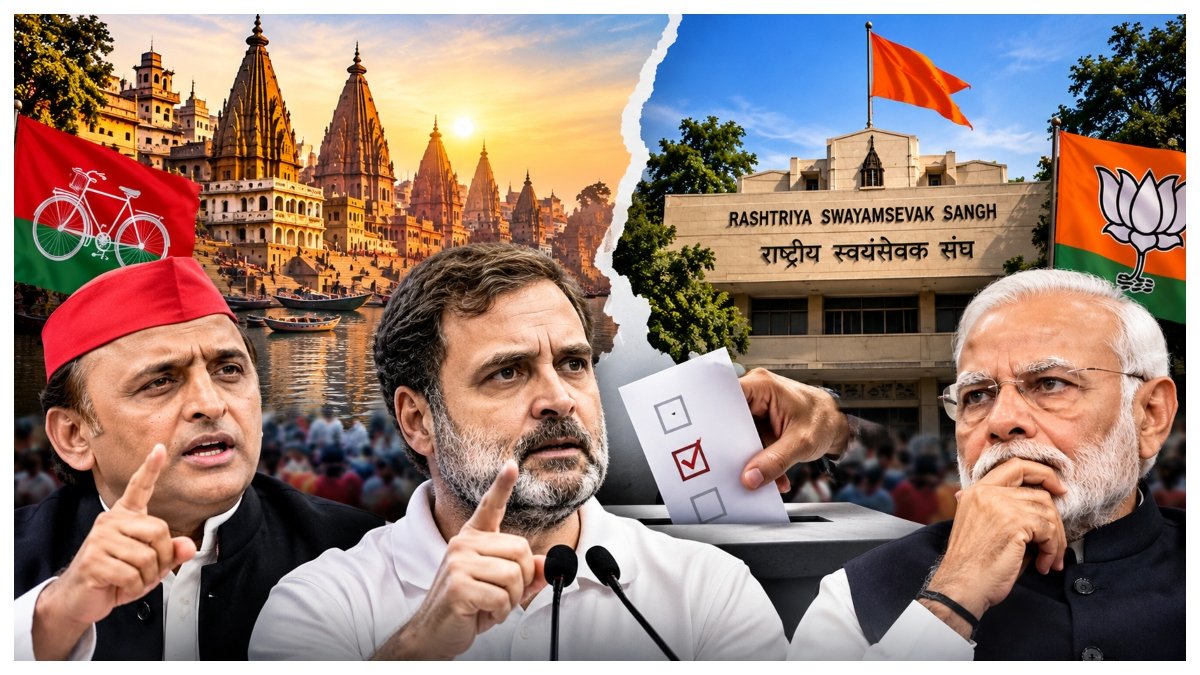
Lucknow: The BJP’s electoral setbacks in Prime Minister Narendra Modi’s Varanasi constituency and the RSS stronghold of Nagpur have intensified political debate over Congress leader Rahul Gandhi’s allegations of vote theft and electoral transparency.
While the BJP-led NDA secured 16 of the 28 Legislative Council seats contested across four states, opposition victories in these politically significant constituencies have raised questions about the broader electoral narrative.
BJP Faces Kashi Setback
In Uttar Pradesh, the BJP won six of the 11 Legislative Council seats, while Akhilesh Yadav’s Samajwadi Party secured five, improving its tally from three in 2020.
The SP retained both Teachers’ and Graduates’ constituencies in Varanasi, represented by Modi in the Lok Sabha since 2014.
Meanwhile, BJP candidate Dhruv Tripathi narrowly retained the Gorakhpur-Faizabad Teachers’ constituency by 307 votes.
Congress Retains Nagpur
In Maharashtra, Congress candidate Abhijit Wanjari retained the Nagpur Graduates’ constituency, defeating BJP’s Sudhakar Kohale.
The victory carries symbolic significance as Nagpur houses the RSS headquarters and is associated with senior BJP leaders Nitin Gadkari and Devendra Fadnavis.
Vote Theft Debate
The results have revived scrutiny of Rahul Gandhi’s allegations of electoral manipulation and the INDIA bloc’s Vote Chor, Gaddi Chhor campaign.
Opposition victories in BJP-associated strongholds challenge any suggestion that electoral outcomes invariably favour the ruling party.
However, isolated election results neither establish nor disprove allegations concerning voter rolls, voting procedures or electoral administration. Such claims require independent examination of evidence.
Ballot Paper Factor
Unlike Assembly and Lok Sabha elections, Teachers’ and Graduates’ Legislative Council constituencies have restricted electorates and use ballot papers instead of electronic voting machines.
Akhilesh Yadav has maintained his opposition to EVMs, stating that his party would continue questioning their use even after securing an electoral majority.
Political Implications
Prime Minister Modi has questioned Congress’s performance in ballot-paper elections, while Congress leader Jairam Ramesh has highlighted the opposition victories.
The results underline two competing political realities: the NDA retains an overall electoral advantage, but opposition parties remain capable of defeating BJP candidates in symbolically important constituencies.
The wider dispute over electoral transparency, however, remains unresolved.