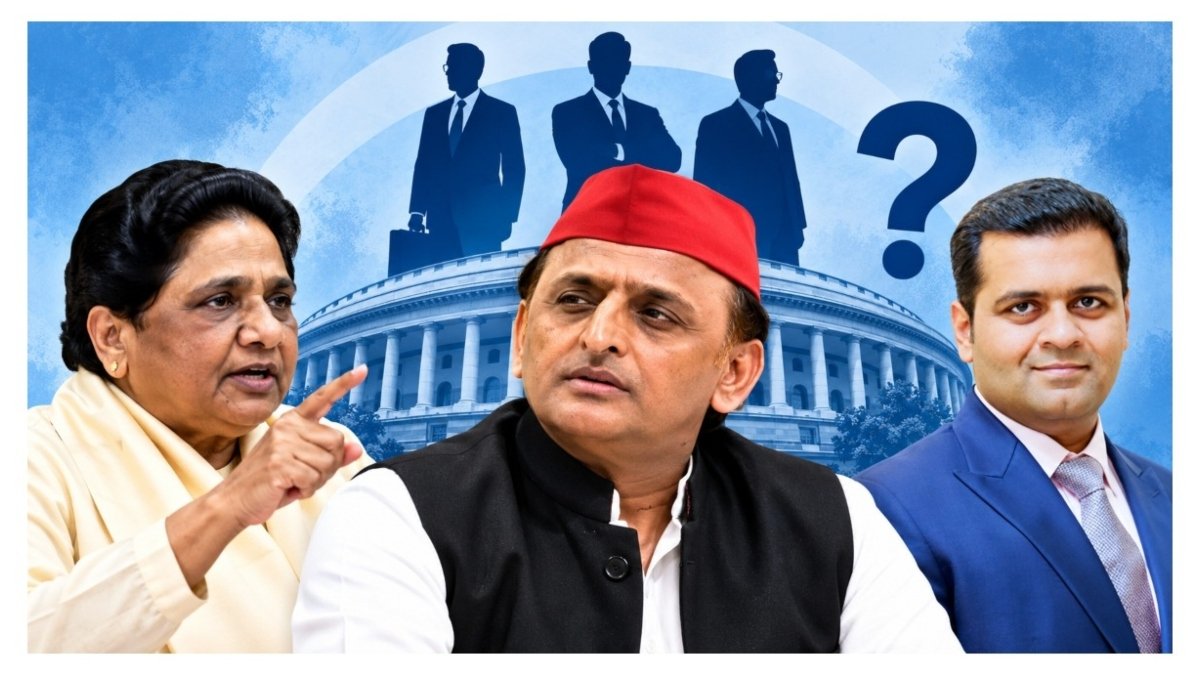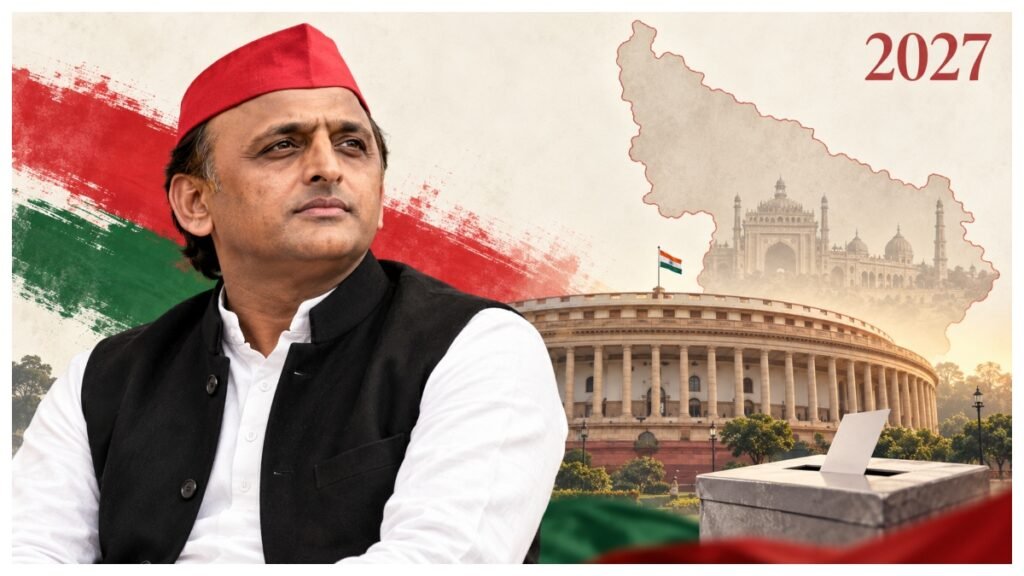

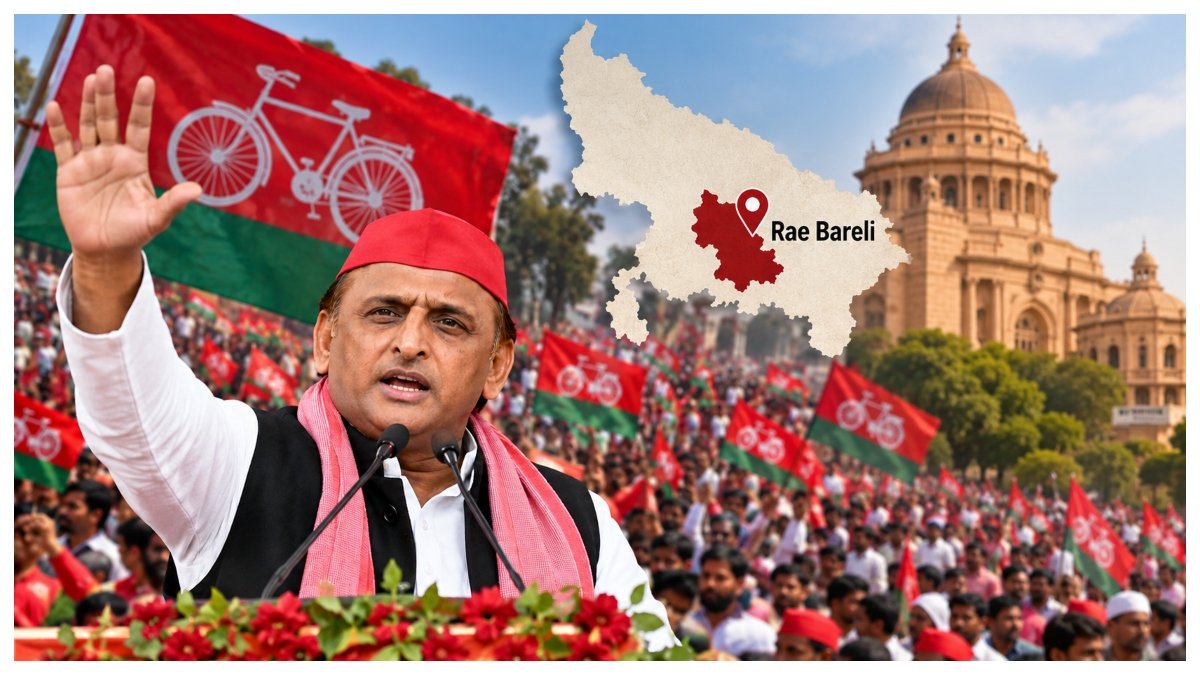
Lucknow: Samajwadi Party president Akhilesh Yadav’s decision to roll out his PDA Rath from Rae Bareli carries significance beyond another campaign event. With the 2027 Uttar Pradesh Assembly election approaching, the choice of a traditional Congress stronghold appears designed to combine cadre mobilisation, social coalition-building and alliance-era political signalling.
Rae Bareli is represented in the Lok Sabha by Congress leader Rahul Gandhi, while the SP has a substantial Assembly presence in the district. In the 2022 Uttar Pradesh election, the SP won four of Rae Bareli district’s six Assembly constituencies — Bachhrawan, Harchandpur, Sareni and Unchahar.
Why Rae Bareli Matters
The location allows Akhilesh to underline the SP’s organisational strength while operating in territory of considerable importance to its Congress ally.
The timing is also noteworthy as the SP and Congress prepare for the 2027 contest and seat-sharing remains an important question. Akhilesh has said the alliance remains strong while indicating that “winnability” would be relevant when seats are distributed.
That makes Rae Bareli an interesting testing ground: Congress retains enormous symbolic importance here, while the SP can point to its Assembly-level electoral footprint.
A Message To The Rebel In His Own Backyard
Another layer to Akhilesh Yadav’s choice of Rae Bareli is the presence of Manoj Kumar Pandey, the Unchahar MLA who left the SP camp, moved closer to the BJP and is now a Cabinet minister in the Uttar Pradesh government. Pandey had won Unchahar for the SP in 2012, 2017 and 2022, making him an important part of the party’s earlier strength in the district. By launching a major political mobilisation from Rae Bareli, Akhilesh also appears to be sending a message to former party leaders like Pandey: the SP intends to protect and rebuild its local political base through its organisation and PDA coalition, irrespective of individual defections.
PDA Goes Back To The Ground
At the centre of the campaign is Akhilesh’s PDA formulation — Pichhda, Dalit and Alpsankhyak, or backwards, Dalits and minorities.
The Rath Yatra gives the SP a vehicle to take this coalition-building exercise from speeches and electoral arithmetic to constituency-level mobilisation. Akhilesh’s interaction with local workers, including after the recent confrontation involving the SP-affiliated Chhatra Sabha, also allows the leadership to project organisational solidarity with its cadre.
The larger challenge will be converting mobilisation into sustained booth-level organisation across Uttar Pradesh.
Rath Politics Has History
Rath campaigns have long featured in Akhilesh’s political playbook. His campaigning ahead of the 2012 Assembly election accompanied a major SP resurgence, with the party ultimately winning 224 of 403 seats and securing a majority.
The electoral outcomes in subsequent Assembly elections were different, but the SP continued using road campaigns as a means of direct voter contact and cadre mobilisation.
The strongest recent reference point is the 2024 Lok Sabha election. The SP won 37 seats, making it the third-largest party in the Lok Sabha behind the BJP and Congress.
Early Signal For 2027
The crowds and political activity surrounding the Rae Bareli programme suggest the SP has moved visibly into campaign mode. But rallies are only one element of a much longer electoral contest.
For Akhilesh, the political objective appears broader: preserve the social coalition that worked for the SP in 2024, strengthen the organisation and manage the electoral partnership with Congress.
Rae Bareli, therefore, is not merely the starting point of another journey. It offers an early indication of how the SP intends to structure its campaign for 2027.