
Mumbai: Meta-owned WhatsApp has launched a bill payment feature in India, allowing users to pay household and utility bills directly within the messaging app.
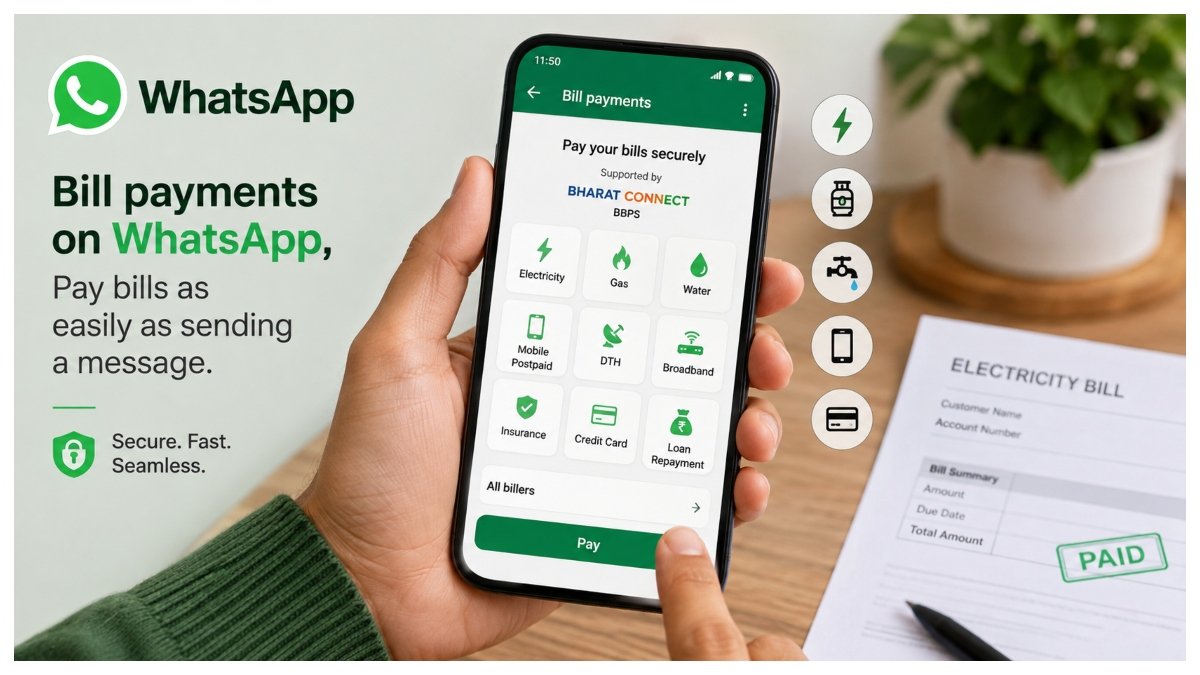
The service is supported by the Bharat Connect, or BBPS, network and provides access to 22,722 billers across 30 categories, WhatsApp said.
The feature is being rolled out gradually across India and will become available to Android and iOS users over the coming weeks.
What Bills Can Users Pay?
WhatsApp users will be able to pay electricity, gas and water bills, along with FASTag charges, insurance premiums, credit card bills and loan repayments without leaving the app.
Users can access the service by tapping the relevant icon at the top of the WhatsApp home screen.
The feature also allows people to view previous payments and upcoming bills, manage accounts and select their preferred payment method.
Bills can be pre-fetched and displayed through a household bills summary. Billers previously paid through WhatsApp will also appear on Payments Home, allowing users to access them quickly.
Multiple Accounts Under One Biller
WhatsApp is also allowing users to manage multiple accounts linked to the same biller. This could help people handle bills for their home, office and family from one place.
Frequently used bill categories will appear automatically, while users can select the ‘see all’ option to explore the wider list.
Arun Srinivas, Managing Director and Country Head of Meta India, said the company wants to make paying bills on WhatsApp as simple as sending a message.
Also read: Block deals surge to ₹98,353 crore in August, activity hits third-highest monthly level
WhatsApp Expands Payment Services
The launch further expands WhatsApp’s role in India’s rapidly growing digital payments ecosystem.
Users already use the platform for services including mobile recharges, metro ticket bookings and accessing citizen services through government chatbots.
With bill payments now integrated into the app, WhatsApp is bringing another frequently used digital service into its messaging platform.
The company expects the feature to make routine payments easier, particularly by reducing the need to switch between multiple apps.