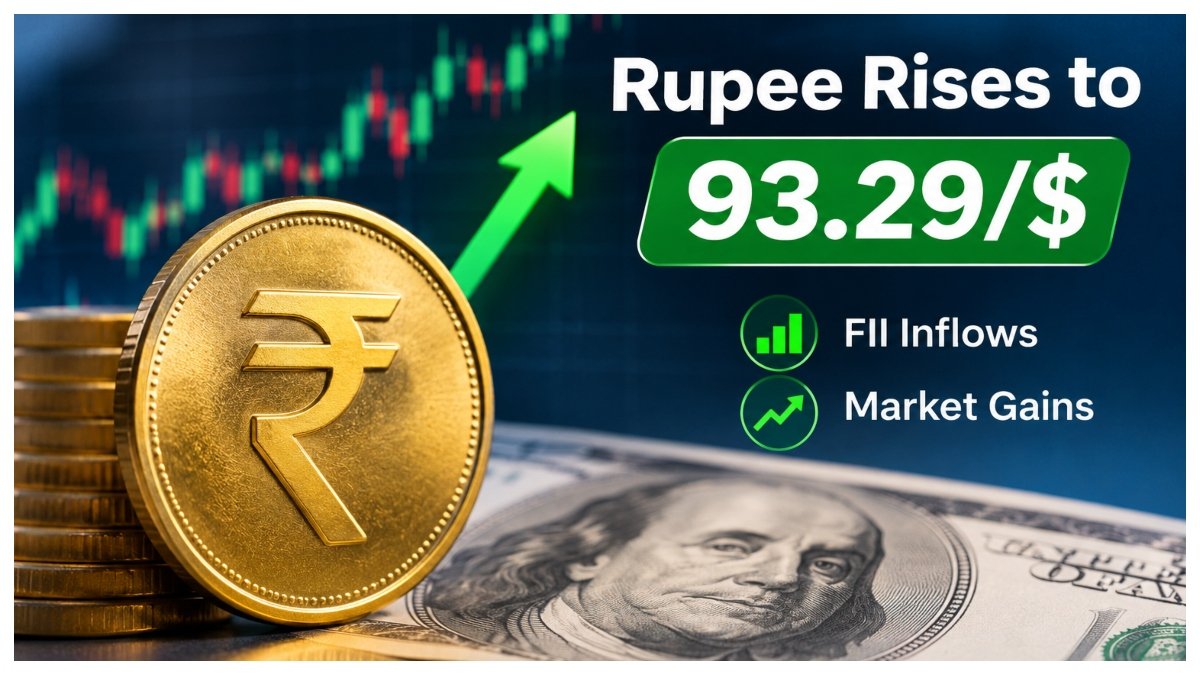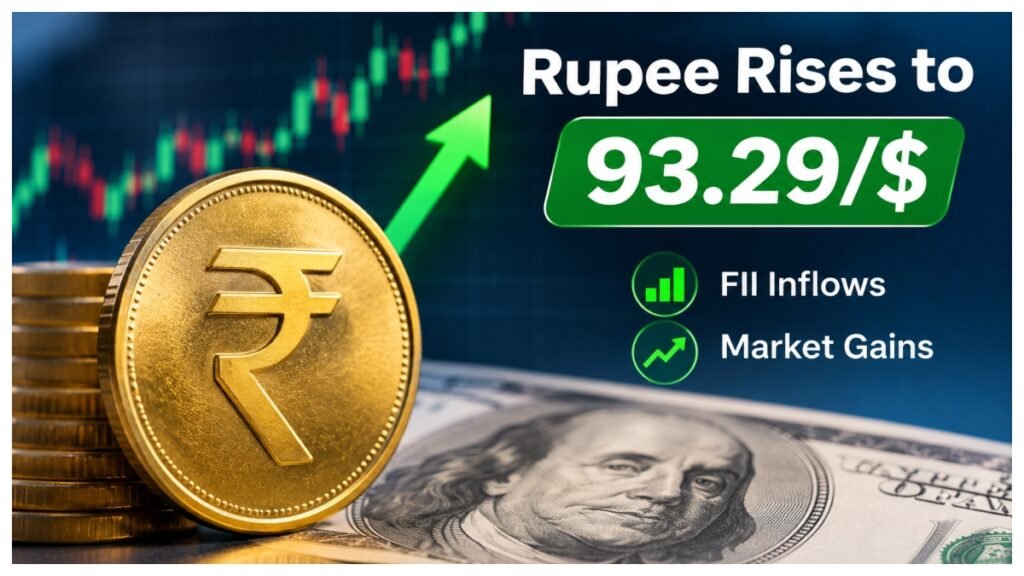

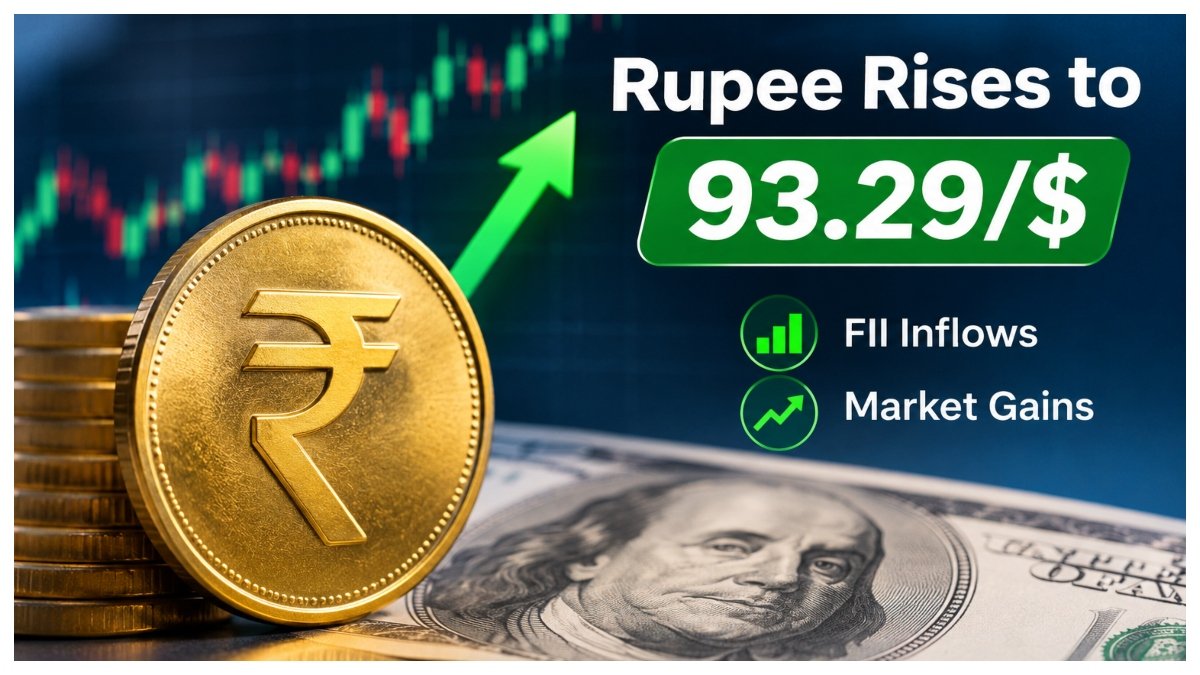
New Delhi: The Indian rupee climbed to its highest level in seven months on Thursday, November 19, supported by strong foreign institutional investor (FII) inflows, softer commodity prices and a sharp rally in domestic equity markets.
The domestic currency appreciated 0.16% to close at 93.29 against the US dollar, extending its recent gains despite strength in the American currency and concerns over higher US interest rates.
Foreign Inflows Support Rupee
The rupee’s recovery coincided with a strong rally in Indian equities, with the benchmark Nifty gaining around 1% on Thursday.
The index has surged more than 10% so far in November, supported by renewed foreign investor interest in Indian stocks.
Foreign investors have reportedly pumped nearly ₹1 lakh crore into domestic equities this month, helping the rupee appreciate approximately 1.8%.
This has made the Indian currency Asia’s best-performing currency during November.
RBI Intervention Eases
Strong foreign inflows have also reduced pressure on the Reserve Bank of India (RBI) to defend the domestic currency.
After months of heavy intervention, the central bank has reportedly scaled back dollar sales as market conditions improved.
Meanwhile, softer commodity prices have helped ease concerns over India’s import bill, providing additional support to the rupee.
The currency initially weakened by 8 paise to 93.49 against the dollar before recovering during afternoon trading.
US Dollar Remains A Risk
Despite the rupee’s recovery, analysts cautioned that global monetary conditions could create fresh challenges.
The US dollar index climbed towards 103.8, near a 19-month high, amid expectations of further interest rate increases by the Federal Reserve.
Also read: Kaynes Technology Q2 Profit Plunges 62% To ₹45 Crore, Rising Costs Squeeze Margins
Higher US rates generally strengthen the dollar and put pressure on emerging-market currencies.
However, sustained foreign inflows have helped the rupee withstand these external pressures.
What Lies Ahead?
Analysts expect the rupee to trade between 92.75 and 93.75 in the near term, with a positive bias.
They cautioned that any slowdown in foreign buying, combined with prolonged dollar strength, could reverse recent gains.