

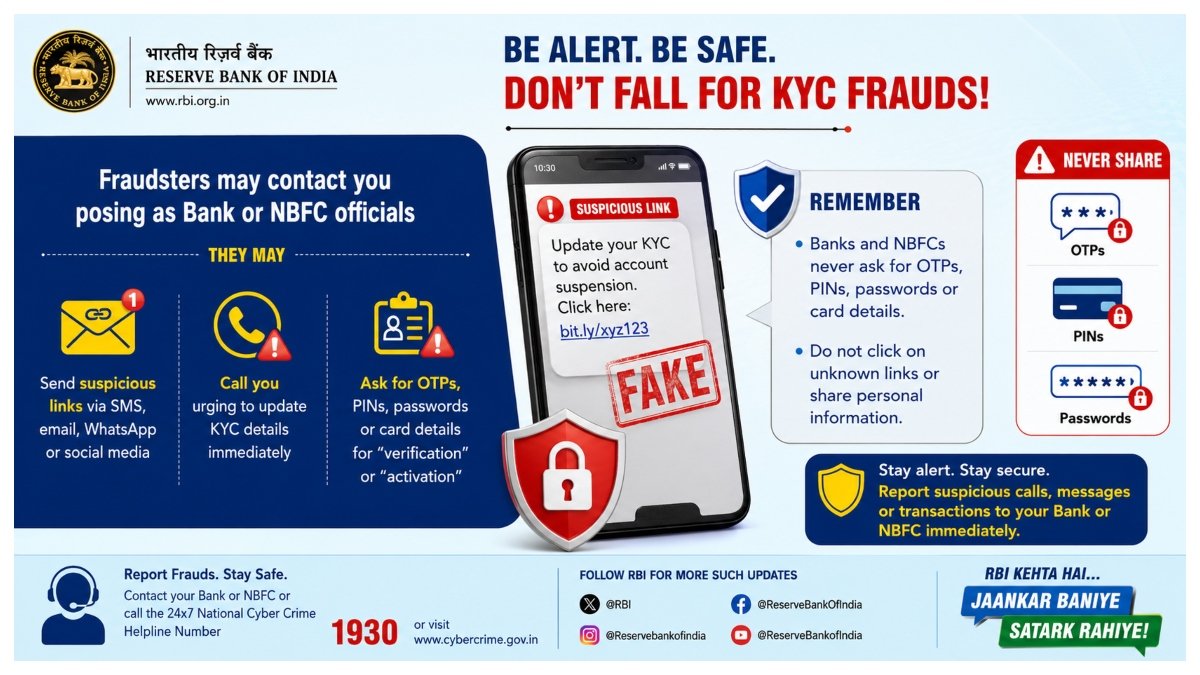
New Delhi: The Reserve Bank of India (RBI) has cautioned bank and NBFC customers against fraudsters sending fake Know Your Customer (KYC) update messages to steal sensitive financial information.
Such messages often warn customers that their bank account could be blocked or restricted if they do not immediately update their KYC. The RBI has urged people not to panic or act hurriedly after receiving such messages.
How KYC fraud works
Fraudsters try to create a sense of urgency by claiming that a customer’s KYC has expired or needs an immediate update. They may ask users to click on unknown links or provide confidential banking information.
Customers should be particularly careful about sharing details such as OTPs, PINs and passwords. Clicking suspicious links can also expose users to financial and digital security risks.
RBI suggests three safety rules
The RBI has highlighted three simple steps — Stop, Think and Act — to help customers protect themselves.
Customers should first stop and avoid making hurried decisions after receiving an alarming message. They should then think carefully and verify whether the communication is genuine.
The central bank’s awareness message says banks and NBFCs do not send links for KYC updates. Customers receiving suspicious messages should avoid clicking such links or providing sensitive details.
Instead, they should contact their bank or NBFC through official channels to check whether any KYC-related action is actually required.
Stay alert against suspicious links
The RBI has stressed the message, “Unknown Link = Unknown Risk”, highlighting the importance of avoiding links received from unverified sources.
Customers can access financial awareness and fraud-prevention information through the RBI’s Financial Education portal.
The awareness campaign is part of the central bank’s broader effort to educate customers about safe banking practices and protect them from financial fraud.