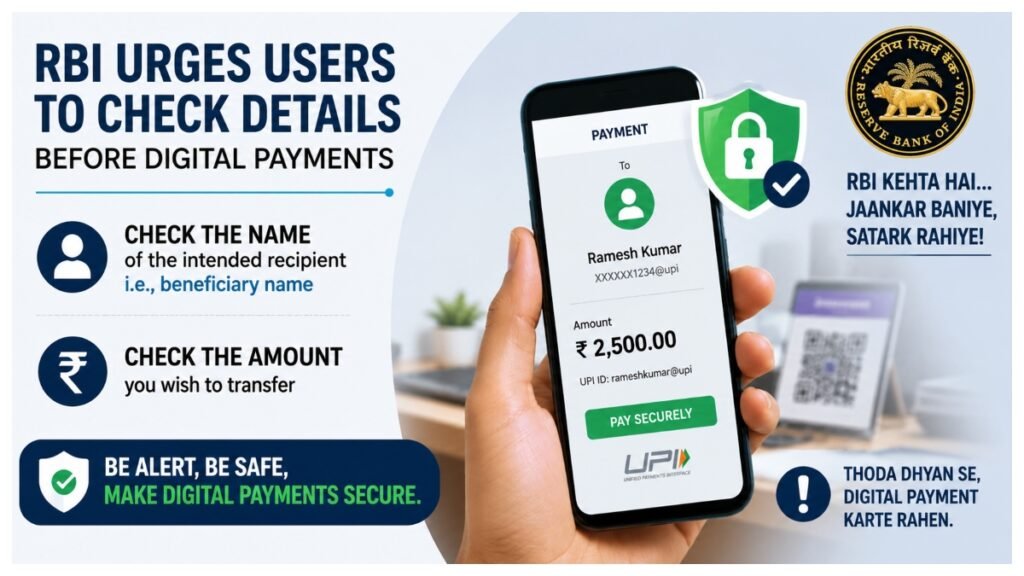

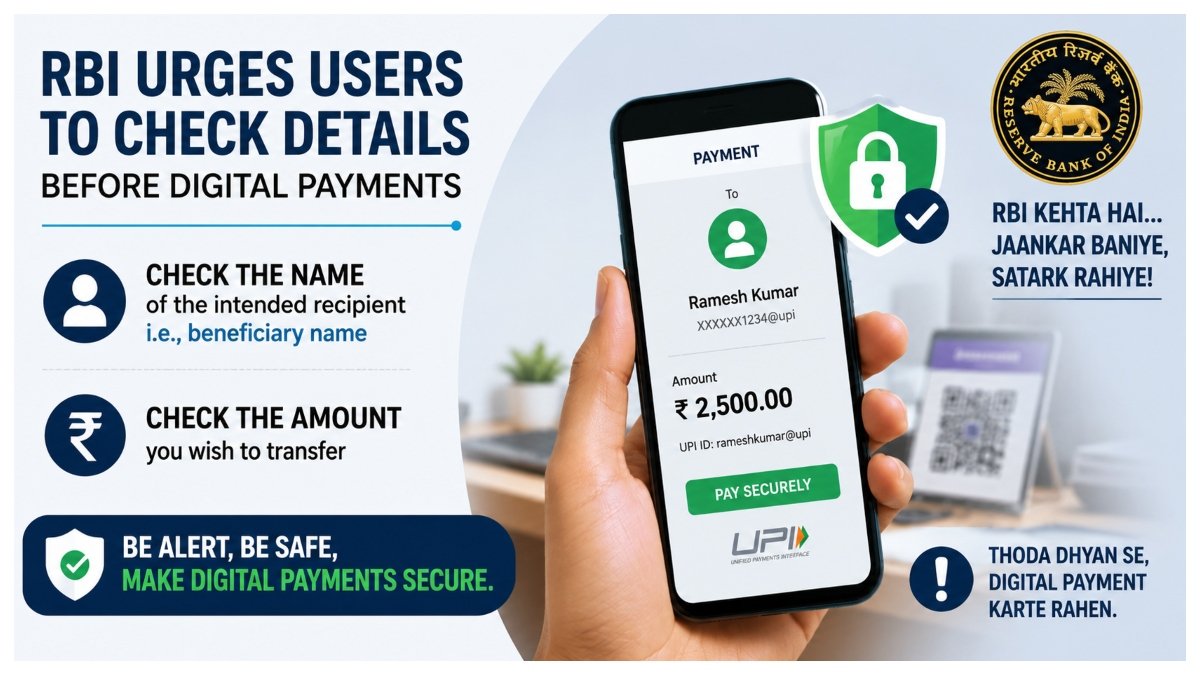
Mumbai: The Reserve Bank of India (RBI) has reminded customers to exercise caution while making digital payments and verify key transaction details before transferring money.
The advisory aims to encourage safer digital transactions and reduce the risk of money being transferred to an incorrect recipient.
Check Beneficiary Name
Before approving any digital payment, users should carefully check the name of the intended recipient or beneficiary displayed on the payment screen.
This simple verification can help prevent accidental transfers to the wrong person, particularly when users are making payments through digital channels.
RBI’s message underlines that customers should not rush through the payment process. Taking a few seconds to review transaction information before confirmation can help avoid mistakes.
Verify Payment Amount
Users should also double-check the amount they intend to transfer before authorising a transaction.
An incorrectly entered amount could result in users sending more or less money than intended. Checking the figure before entering a PIN or completing authentication can reduce such errors.
The central bank’s broader message encourages people to continue using digital payments while remaining attentive during every transaction.
Also Read: RBI In Wait-And-Watch Mode On Policy Rate, MPC Minutes Flag Inflation Risks
Stay Alert While Paying
India has witnessed rapid adoption of digital payment methods, making awareness about safe transaction practices increasingly important for users.
The RBI regularly runs public-awareness initiatives aimed at educating customers about financial safety and responsible banking practices.
Through its “RBI Kehta Hai” awareness campaign, the central bank encourages customers to remain informed and vigilant while carrying out financial transactions.
The latest message reinforces a straightforward rule for digital payments: always verify the beneficiary’s name and payment amount carefully before confirming the transaction. A quick check can prevent an avoidable payment error.