
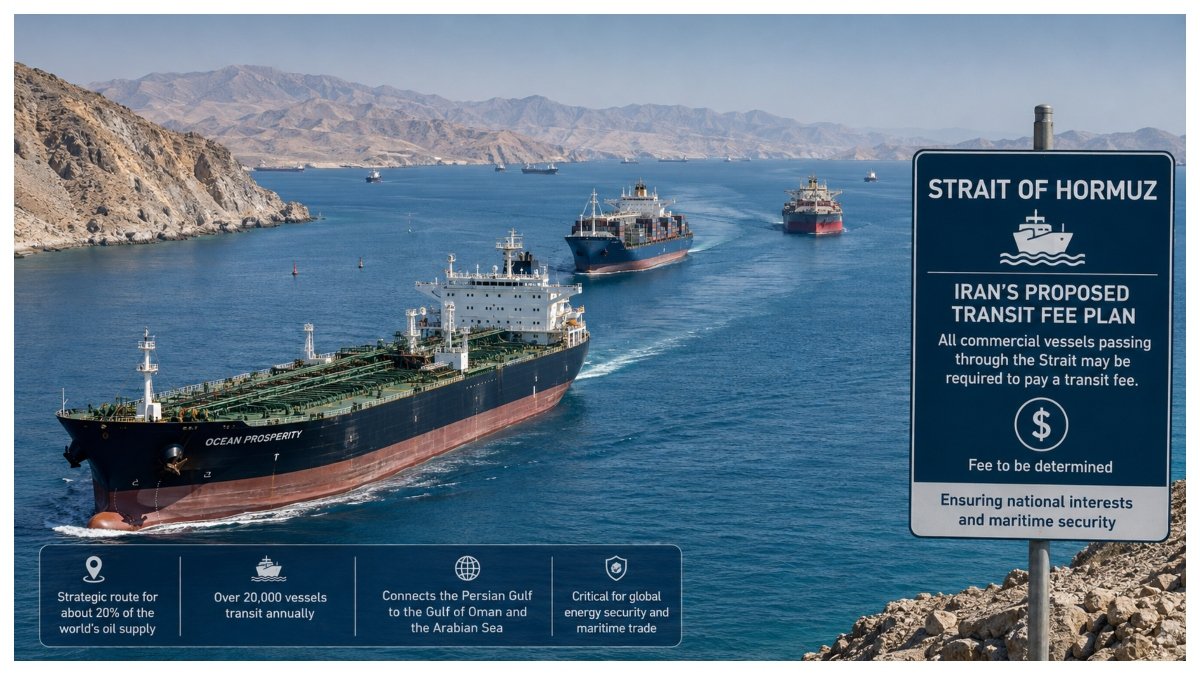
Mumbai: Iran is moving towards imposing a transit fee on commercial vessels passing through the Strait of Hormuz, one of the world’s most strategically important shipping routes.
Iran’s parliamentary National Security and Foreign Policy Committee has approved a proposal establishing a payment framework for international commercial vessels using the waterway.
Up To $2 Million Per Vessel
Under the proposed framework, each commercial vessel could be charged between $1.5 million and $2 million per transit through the Strait of Hormuz.
Iran describes the proposed levy as a service fee rather than a toll. Tehran says vessels would receive security, navigation, insurance, environmental protection and emergency fuel support.
However, the proposal could face international opposition over questions surrounding freedom of navigation and the United Nations Convention on the Law of the Sea (UNCLOS).
Oman Could Get Revenue Share
Oman could also receive a share of revenue generated under the proposed arrangement because of its geographical position along the strait.
According to international media reports, Iran and Oman have been holding discussions over the shared use of waters and distribution of revenue.
An interim understanding has reportedly been reached, although Oman’s final revenue share has not been officially announced.
Debate Over Fee Structure
During discussions, Iran reportedly proposed charging between 5 per cent and 7 per cent of a vessel’s cargo value.
Oman, however, suggested limiting the levy to around 3 per cent to prevent excessive costs for shipping companies and maintain smooth commercial traffic.
Also Reas: RBI In Wait-And-Watch Mode On Policy Rate, MPC Minutes Flag Inflation Risks
Dollar Could Be Bypassed
Payments could reportedly be accepted in Iranian rial or other currencies approved by Tehran, potentially reducing reliance on the US dollar.
The proposed framework could also allow digital assets such as Bitcoin for certain maritime insurance-related payments.
Iran argues that revenue from the scheme would support navigation infrastructure, maritime security, environmental protection and emergency fuel services.
US Tightens Sanctions
Meanwhile, the United States has reportedly announced tougher restrictions targeting five Iranian economic areas: digital assets, advanced technology, gold and precious metals, aviation and shipping.
Foreign companies conducting prohibited transactions with Iran could also face US sanctions under the measures.