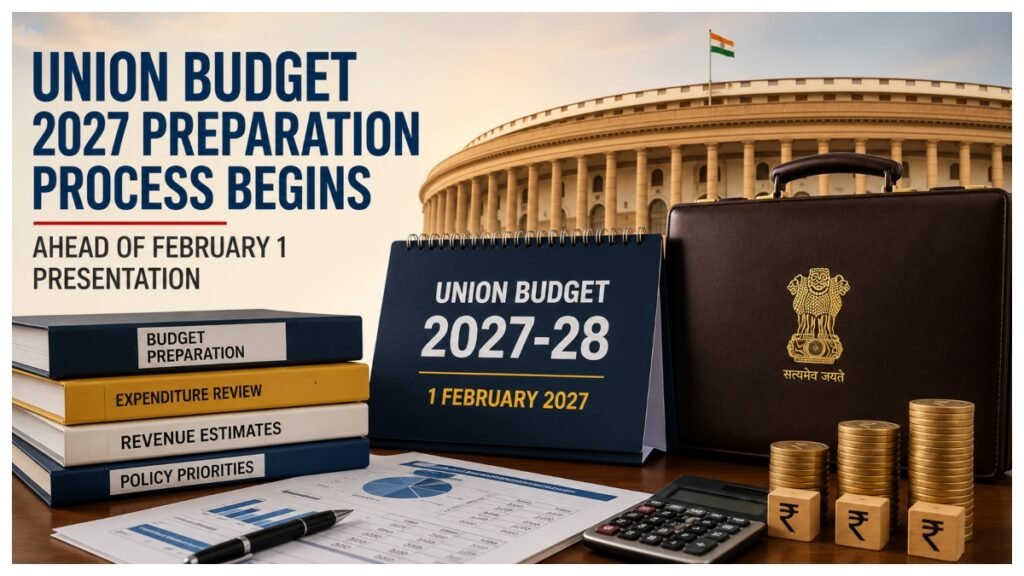

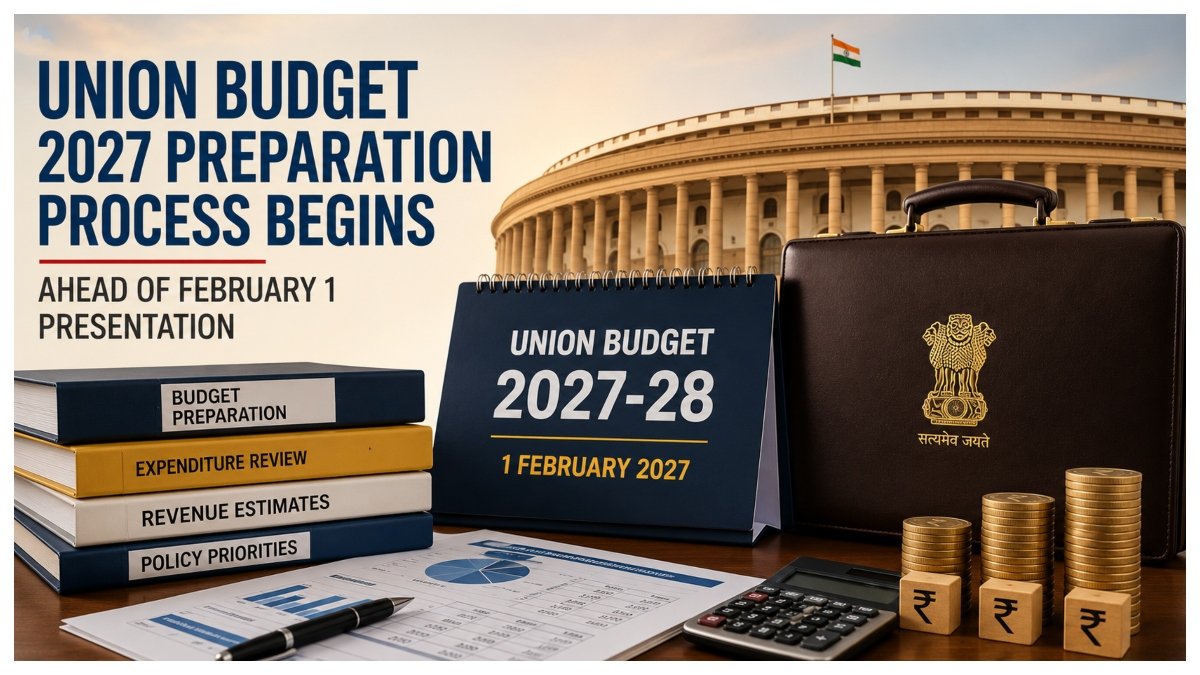
New Delhi: The process of preparing the Union Budget 2027 has begun, with the Department of Economic Affairs’ Budget Division issuing the Budget Circular for 2027-28 to all central government ministries and departments.
The Union Budget is presented annually on February 1. The Budget scheduled for February 1, 2027, will outline the Centre’s revenue and expenditure plans for financial year 2027-28.
Pre-Budget Meetings From October 12
With the circular issued, ministries will begin preparing Revised Estimates (RE) for 2026-27 and Budget Estimates (BE) for 2027-28.
The circular has asked ministries and departments to submit their financial requirements and estimates. Pre-Budget meetings, chaired by the Expenditure Secretary, are scheduled to begin on October 12, 2026.
Ministries Get October 6 Deadline
All ministries and departments have been directed to submit their funding requirements through the Union Budget Information System (UBIS) by October 6, 2026.
Meanwhile, the government has reportedly raised ₹55,757 crore so far this financial year by selling stakes in public sector companies.
The Centre has targeted ₹80,000 crore from such stake sales during 2026-27. It has already achieved nearly 78 per cent of this target, with seven months of the financial year remaining.
Economic Challenges Ahead
Budget 2027-28 will be prepared against a challenging economic backdrop. Global uncertainty, particularly tensions between the US and Iran in the Middle East, has affected economies worldwide, including India.
Higher crude oil prices are adding to inflationary pressures. Persistent inflation could also weigh on economic growth. Meanwhile, the rupee has weakened against the US dollar, with foreign investor selling adding pressure on the currency.
UP Elections In Focus
The government and the Reserve Bank of India are expected to remain focused on controlling inflation.
The 2027 Uttar Pradesh Assembly elections could also influence Budget priorities. The government may consider measures aimed at attracting foreign investment while balancing growth, inflation and fiscal requirements.