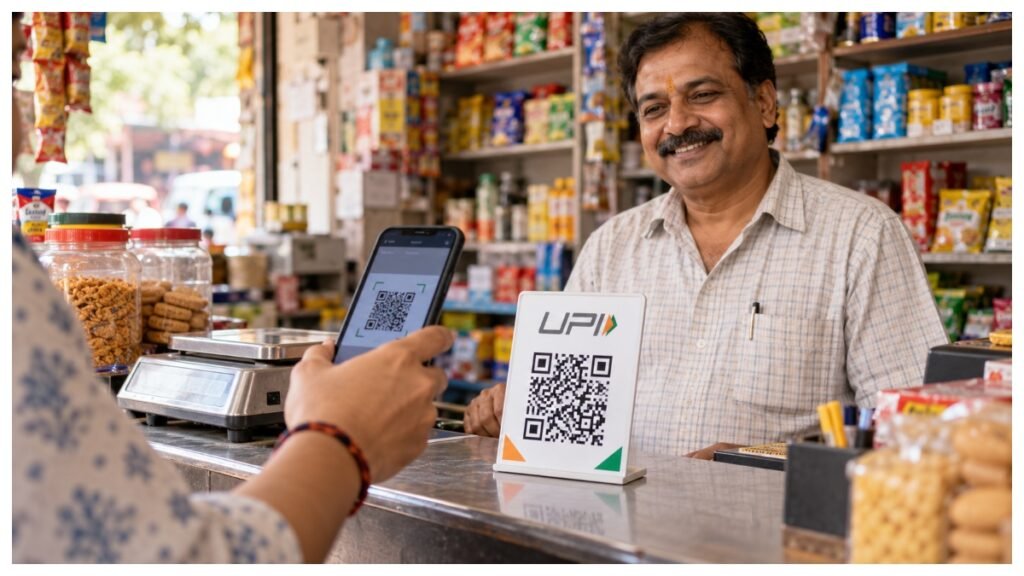


Mumbai: UPI payments linked to stock market transactions are set to attract a merchant discount rate (MDR), raising questions about whether brokers will absorb the additional expense or pass its impact on to customers.
Reports had suggested that the National Stock Exchange (NSE) was discussing the issue with the government. However, NSE managing director and chief executive officer Ashish Kumar Chauhan has denied any such discussions.
Speaking to The Economic Times, Chauhan said the matter rests entirely with stockbrokers and their clients. Both sides will need to decide how to manage the impact of the new charges.
MDR From October 15
According to the reported framework, a 0.02% MDR will apply to UPI payments related to the stock market and other capital market activities from October 15, 2026.
The charge will cover payments involving shares, securities, mutual funds and stockbrokers. It will be capped at Rs 300 per transaction, meaning the MDR cannot exceed that amount even when a payment involves a larger sum.
Who Pays The Charge?
The MDR is intended to be paid by the merchant, or the entity receiving the payment, rather than collected directly from the customer.
Also read: UPI Payments Up To Rs 2,000 Stay Free, Govt Bars Charges
However, this leaves a question unanswered: will brokers and other financial businesses absorb the cost themselves, or could customers eventually feel its impact through changes in charges?
The distinction matters because a charge on accepting payments can create an additional expense for brokers even when the customer does not complete an investment.
Why Brokers Face A Challenge
Consider a customer who transfers money to a broker through UPI but subsequently makes no share purchase. The broker could still have to pay MDR on the incoming transfer.
This raises questions about who should bear the additional cost in such cases.
Chauhan said brokers and customers would have to work out a solution together. How both sides respond to the new charges remains to be seen as they assess the practical implications.