
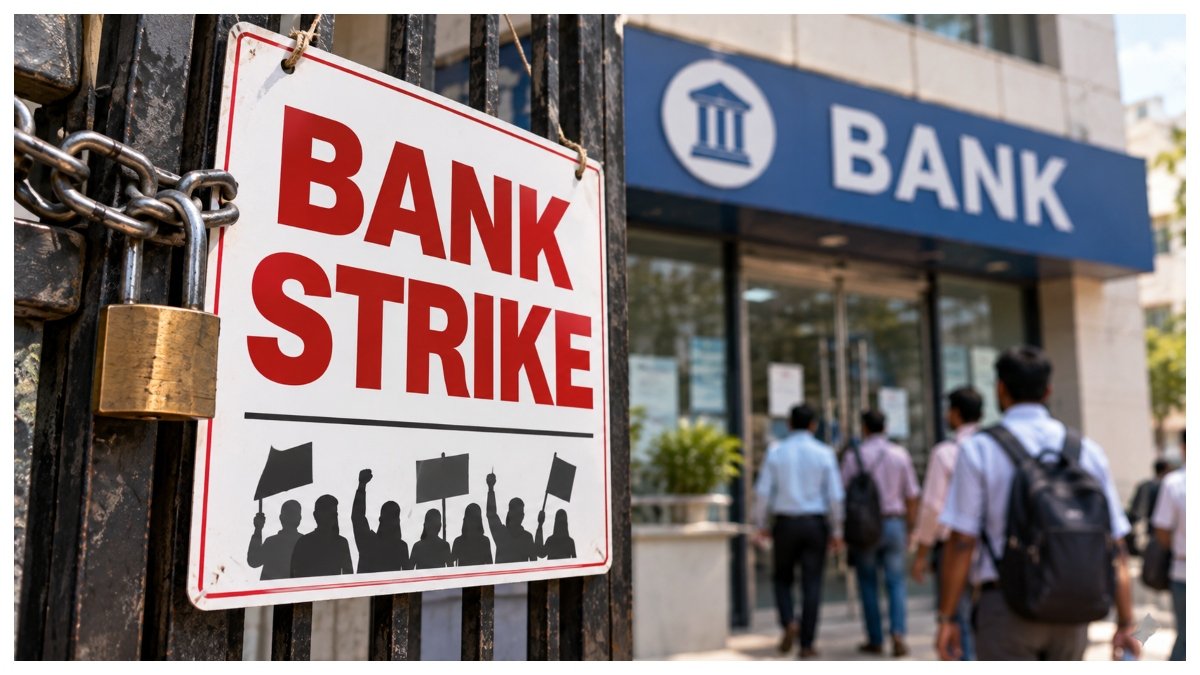
New Delhi: Bank unions will proceed with their three-day nationwide strike from September 28 after a conciliation meeting with the Deputy Chief Labour Commissioner ended without a resolution on Tuesday.
The United Forum of Bank Unions (UFBU), which says it represents around 90% of India’s banking workforce, has called the strike for September 28, 29 and 30, primarily demanding implementation of five-day banking.
Conciliation Meeting Inconclusive
The meeting came a day after the Finance Ministry appealed to bank employees to withdraw the strike call and resolve outstanding demands through dialogue.
UFBU said it informed the government, Indian Banks’ Association and bank managements that it could reconsider the strike if there was a concrete and positive development on five-day banking.
Otherwise, the unions would proceed with the planned three-day action.
Finance Ministry representatives said the five-day banking proposal remains under consideration, with views of other stakeholders required before a decision is taken.
Banking Services Face Disruption
The strike could effectively disrupt physical banking services for five consecutive days because the preceding weekend, September 26 and 27, falls immediately before the three-day industrial action.
September 30 is also the half-yearly closing date for banks, making the timing particularly important for reconciliation, provisioning, treasury and market operations.
Several public sector banks have begun advising customers to use digital banking channels, including mobile banking, internet banking, ATMs, UPI and business correspondent points, if the strike goes ahead.
What Are Unions Demanding?
Apart from five-day banking, UFBU is seeking improvement and updation of pensions and a uniform dearness allowance formula for pensioners.
The unions are also demanding an option for employees covered under the National Pension System to shift to the Old Pension Scheme.
UFBU had earlier observed a nationwide bank strike on September 11 over its demands.
The Finance Ministry has maintained that strikes disrupt banking services and inconvenience customers, while reiterating its commitment to addressing employees’ concerns through continued engagement and dialogue.