
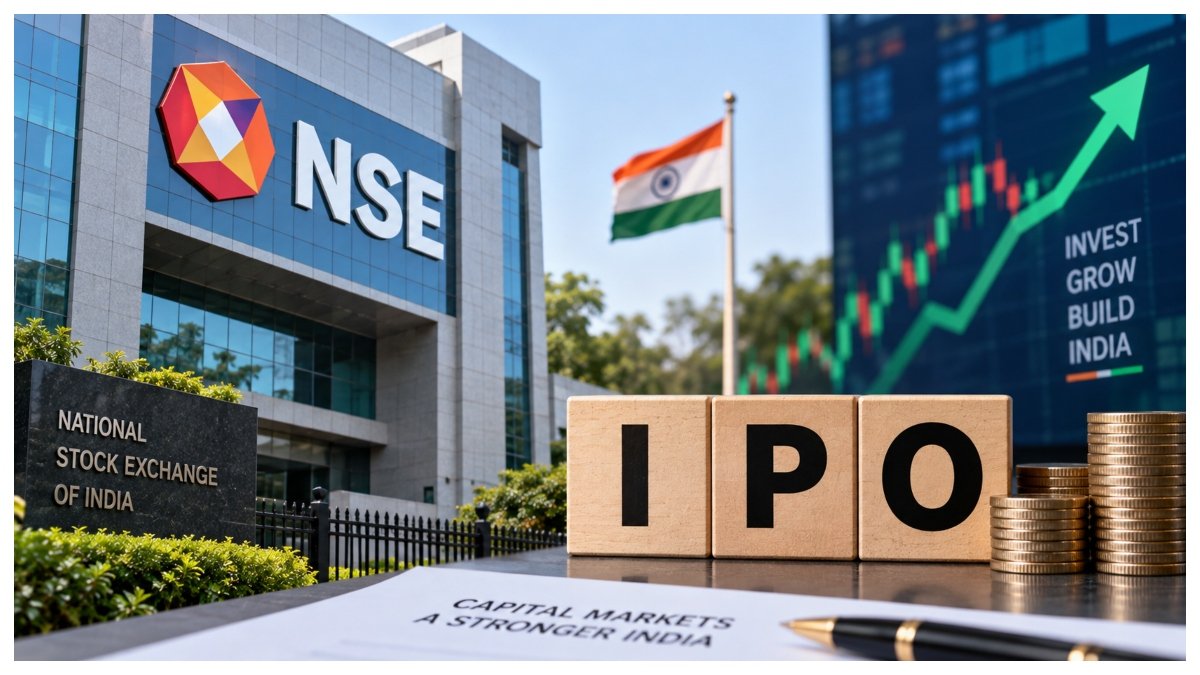
Mumbai: The National Stock Exchange has defended the pricing process for its upcoming initial public offering, saying merchant bankers determined the valuation while the exchange followed their recommendations.
NSE also expects revenue from derivatives to remain sustainable as India’s capital markets deepen and the investor base expands.
Merchant Bankers Decided Pricing
Responding to questions on the sidelines of an IPO conference in Mumbai, NSE officials said the exchange had not separately determined or justified the premium valuation.
The valuation and pricing were decided through the merchant bankers, and the exchange priced the IPO accordingly, officials said.
NSE has fixed its IPO price band at Rs 1,700 to Rs 1,785 per equity share.
The issue will open on September 17 and close on September 21. Anchor investor bidding is scheduled for September 16, while the shares are expected to list on September 24.
Derivatives Revenue Outlook
On whether derivatives revenue can remain sustainable, NSE pointed to the evolution of India’s capital markets and regulatory framework over the past three decades.
The exchange said measures introduced by the Securities and Exchange Board of India, including tighter regulations, have strengthened investor protection while encouraging wider retail participation.
NSE expects continued expansion of India’s investor base and capital markets to support its business in the coming years.
No Application For Own Shares
NSE Managing Director and CEO Ashishkumar Chauhan said the exchange has not applied to SEBI for permission to allow trading of its own shares on its platform.
Chauhan also highlighted NSE’s role in channelising domestic savings into capital markets since its establishment.
Also read: NSE IPO Gets SEBI Observation Letter, Rs 30,000 Crore Issue Moves Closer To Launch
He said NSE has fulfilled the mandate envisioned by its founders and has grown into India’s largest exchange and one of the world’s biggest exchanges by several measures.
Chauhan also highlighted NSE’s vertically integrated business model and presence across multiple asset classes.
The exchange owns its technology infrastructure and operates across equities, commodities, currencies, electricity and other segments, giving it a diversified market presence.