
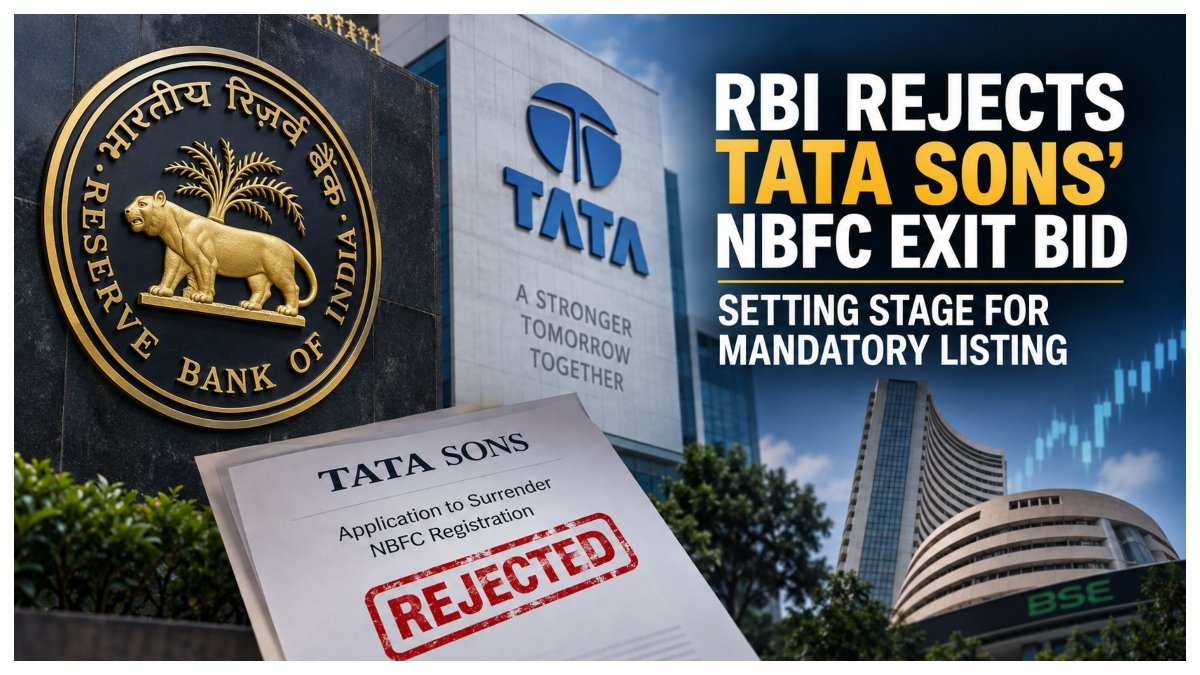
Mumbai: The Reserve Bank of India (RBI) has rejected Tata Sons’ application to surrender its Core Investment Company registration, narrowing the holding company’s options to avoid a stock-market listing.
The decision was communicated to Tata Sons on Saturday, according to sources. The company had applied for deregistration in March 2024 after repaying more than ₹21,000 crore of debt.
Upper Layer Status Remains
Tata Sons will continue to be classified as an Upper Layer non-banking financial company (NBFC), bringing it under stricter regulatory requirements, including mandatory listing.
The RBI had first placed Tata Sons in the Upper Layer category in September 2022. Under the regulatory framework, such NBFCs are required to list on stock exchanges within three years.
Tata Sons had sought to leave the NBFC framework before its original September 30, 2025 listing deadline. Approval would have allowed the holding company to remain privately held.
New Rules Tighten Position
The regulatory position became tougher after revised RBI norms took effect in June 2026. Under the new framework, NBFCs with assets of ₹1 lakh crore or more automatically fall within the Upper Layer.
Tata Sons reported standalone assets exceeding ₹2 lakh crore as of March 2026, placing it comfortably above the threshold.
Also read: EPFO Delays PF Payout, Retired Employee To Get 6% Interest On ₹14 Lakh
A listing would represent a significant change for the holding company of the Tata Group, which owns stakes across information technology, automobiles, steel, aviation, consumer products, hospitality and financial services.
Shareholders Differ Over Listing
Tata Trusts, chaired by Noel Tata and holding more than 65% of Tata Sons, has opposed a listing amid concerns over the group’s long-term ownership structure.
The Shapoorji Pallonji Group, which owns about 18%, has supported a listing as a way to unlock the value of its investment.
The RBI decision does not amount to an IPO announcement. The timing, size and structure of any potential Tata Sons public offering remain undecided as attention now shifts towards the company’s next regulatory steps.